
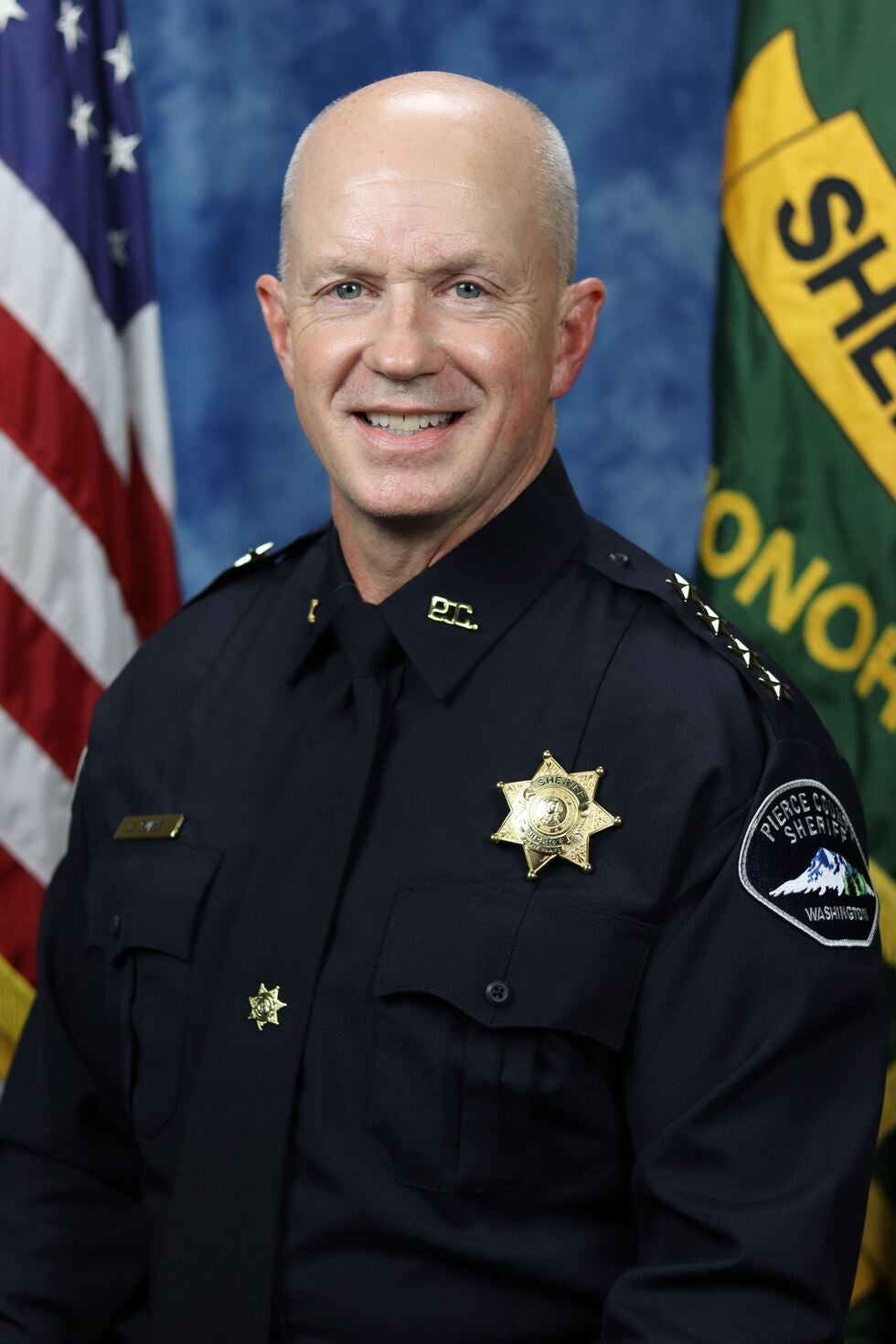
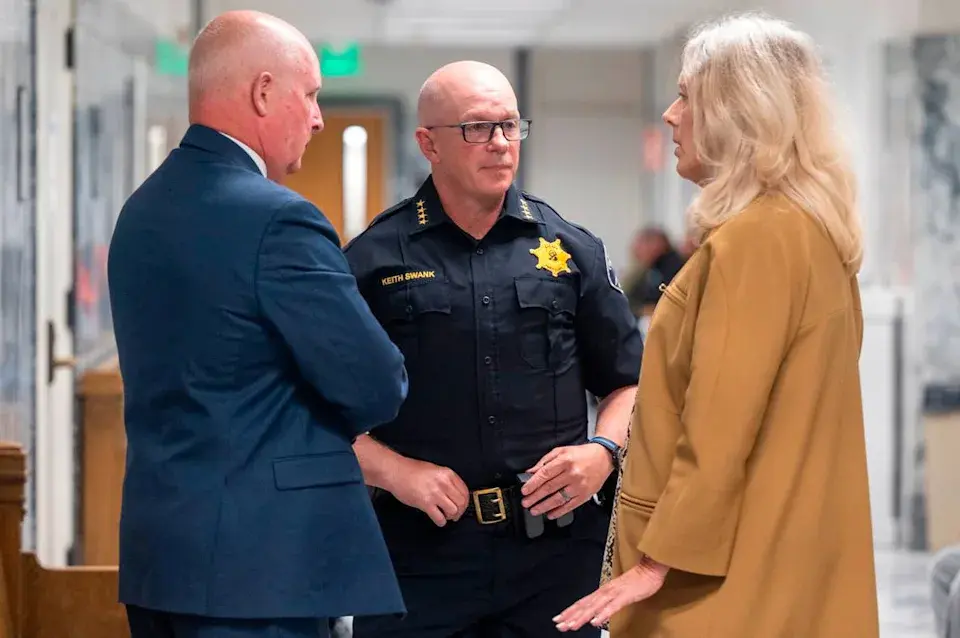
Pierce County Sheriff Keith Swank made headlines this week—not for an arrest, but for offering what he called “free legal advice” live on the radio.
During an interview on The Gee and Ursula Show, Sheriff Swank responded to host Ursula Reutin's story about being stopped by the Washington State Patrol (WSP) and performing field sobriety tests. His advice?
“I can tell you this, if WSP made a traffic stop, first off, you should never do a field sobriety test. I don't know why you did that, even if you drink or not... and I'm giving that free legal advice to everybody out there.”S
It's a bold and problematic statement—especially from a sheriff currently under scrutiny for how his department handled a DUI and vehicular assault investigation involving a high-ranking officer. It's also notable considering Swank himself was arrested for DUI in 2007, though he has since publicly disputed the circumstances.
So, what prompted this comment, why is it legally questionable, and what does Washington law actually say about refusing a field sobriety test?
The DUI Arrest That Sparked the Controversy
Swank's radio appearance came as the Pierce County Sheriff's Office faced mounting criticism over its response to the DUI arrest of Major Chadwick Dickerson, a 25-year veteran and head of sheriff's detectives.
Dickerson allegedly failed to yield and collided with an SUV, injuring multiple people. According to reports:
- Deputies on the scene did not administer a field sobriety test or breathalyzer, and stated that Dickerson showed no signs of impairment.
- He eventually left the scene with his wife and later went to an urgent care facility. Nearly two hours later, a WSP trooper observed signs of alcohol use, including a strong odor of alcohol and bloodshot eyes. Dickerson admitted to consuming two vodka sodas while golfing earlier that day.
Radio Host Ursula contrasted the department's leniency toward Dickerson with her own experience during a routine WSP traffic stop, where she was asked to perform a field sobriety test despite being completely sober.
That's when Sheriff Swank issued his “free legal advice.”
Is Sheriff Swank's “Free Legal Advice” Accurate?
While Sheriff Swank may have years of law enforcement experience, it's important to clarify that he is not a licensed attorney, does not hold a Juris Doctor, and is not a member of the Washington State Bar Association (WSBA). His full bio is detailed here.
Swank's blanket advice—that drivers should never agree to field sobriety tests—oversimplifies a complex legal issue and leaves out one of the most important distinctions in Washington DUI law.
What the DUI Law Actually Says:
Under Washington law, field sobriety tests (FSTs) are voluntary. You can legally decline them without facing automatic penalties. However, that refusal is not without consequence.
Refusing FSTs may:
- Be introduced in court as evidence of possible impairment
- Lead to arrest based on other observations (e.g., slurred speech, alcohol odor, unsteady balance)
- Influence how aggressively the officer continues their investigation
And here's where the confusion often arises:
FSTs are not the same as breathalyzer or blood tests.
Once you are arrested for DUI, refusing a breath or blood test triggers Washington's Implied Consent Law RCW 46.20.308. Under that law, refusal results in:
- Automatic license suspension for at least 1 year
- Use of the refusal as evidence in court
- Harsher penalties if convicted of DUI
Declining FSTs may be a sound legal strategy in some cases. However, Sheriff Swank's sweeping advice fails to clarify the difference between voluntary roadside tests and post-arrest chemical tests governed by Washington's Implied Consent Law, and which carry mandatory consequences.
That's what makes his public comment controversial and potentially misleading.
What Are Washington DUI Field Sobriety Tests?
Field Sobriety Tests (FSTs) are roadside assessments law enforcement officers use to evaluate impairment. Common FSTs include:
- Horizontal Gaze Nystagmus (HGN)
- Walk-and-Turn
- One-Leg Stand
- Finger-to-Nose
These tests are notoriously subjective and can be influenced by factors unrelated to alcohol or drug use, such as:
- Anxiety or nervousness
- Fatigue or age
- Medical conditions or injuries
- Uneven surfaces or poor lighting
Because of these variables, DUI attorneys often advise caution before participating in FSTs.
Can You Refuse Field Sobriety Tests in Washington?
Yes. Field sobriety tests are voluntary in Washington and are not covered under the state's Implied Consent Law (RCW 46.20.308), which governs chemical testing after arrest.
What Happens If You Refuse a Field Sobriety Test?
- No automatic license suspension (unlike refusing a breath test after arrest)
- Refusal may be introduced as evidence by prosecutors
- Officers can still proceed with arrest based on other observations
Simply put, you are not legally required to perform these tests—but that doesn't mean your refusal is without legal implications.
What About Refusing a Breathalyzer?
That's a different matter entirely.
If you are arrested for DUI, refusing a breath, blood, or urine test is a violation of Washington's Implied Consent Law and carries serious consequences:
- Automatic license suspension for at least 1 year
- Refusal can be used as evidence in court
- Enhanced penalties if convicted of DUI
This is a key distinction that Sheriff Swank's comment fails to explain. Confusing FSTs with chemical testing could lead a driver to make a decision with significant legal repercussions.
What Should You Do If You're Pulled Over for a DUI in Washington?
If you're pulled over in Washington and suspected of DUI:
✅ Remain calm and respectful
✅ Ask if you are free to leave
✅ You may politely decline field sobriety tests
✅ Do not refuse a breath or blood test after arrest unless you understand the risks
✅ Request to speak with a DUI attorney immediately
Legal decisions during a DUI stop can have serious and lasting consequences. Your best defense is knowing your rights—and getting guidance from a qualified lawyer.
Need Legal Help After a DUI Stop?
If you've been stopped or arrested, don't guess. Call Wolff Defense at 206-504-2500 and Speak with a licensed Washington DUI attorney who can help protect your rights from the very beginning.

Comments
There are no comments for this post. Be the first and Add your Comment below.
Leave a Comment